
The process of stakeholder engagement is about how people roles connect to the value stream, with everyone focusing in the product final result. As opposed to their isolated place in a production pipeline. Continue reading “Stakeholder engagement: the process”
Category: Book notes
My personal notes about books I read
Stakeholder engagement: The business, customers and domain experts
Today I finish the writing about the stakeholders:
- The business
- The customers
- The domain experts
Continue reading “Stakeholder engagement: The business, customers and domain experts”
Stakeholder engagement: The end-users
There are five major stakeholder areas :
- End-users
- Business
- Customers
- Domain experts
- Developers
Both Agile and Lean tell us to break the traditional approach of contacting the stakeholders at a specific moment of the project development, and instead keep a permanent contact with them throughout the project development.
Stakeholder engagement: The value stream
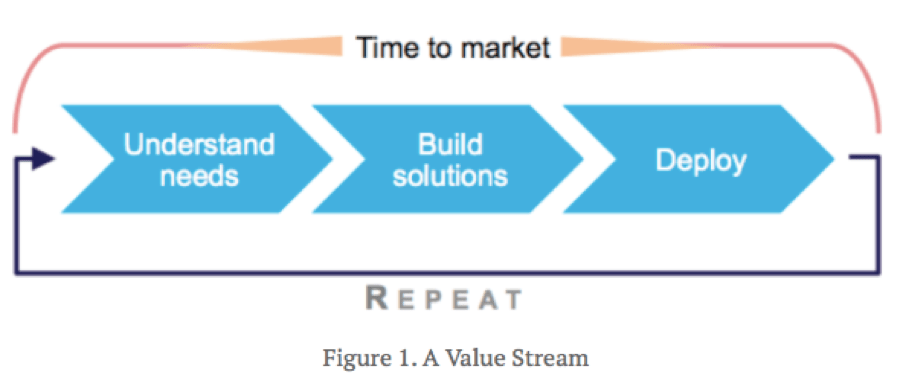
This chapter of the book talks about the people involved in the system development and the processes that guide their work:
- The value stream
- The key stakeholders
- The process of stakeholders engagement
- The network of stakeholders
As there is a lot to cover in this chapter, I will make several posts to cover it in small batches.
In this post, I will write about the value stream.
Agile Production in a Nutshell
Chapter two of the book is a small preview of the whole book, where the authors talk a bit about:
- engaging the stakeholders
- defining the problem
- what the system is
- what the system does
- the code
Lean Architecture
Lean, agile, architecture… This book’s intention is to teach us about lean architecture for agile software development, how we can use the planning values of lean to drive the inspect-and-adapt (short feedback loop) principles of agile.
This first chapter clarifies the concepts of Architecture, Lean and Agile and why we need Lean Architecture.
In today’s fast-paced world, change is the most stable constant.
In order to thrive, a product must swiftly adapt to changes. For this reason, we need Agile methodologies, to have a project (and the team developing it) embrace change and react to it fast to give the product a competitive advantage and keep it in the game.
However, it is difficult to reshape a system if it is cramped with clutter, if to change part of it, we need to change other unrelated parts who might not even be in use. And here enters Lean.
Lean practices help us get rid of the clutter so we can use agile practices to focus on quickly delivering value to the end-user, by delivering basic functionality and iterating on it to deliver better quality. Continue reading “Lean Architecture”
PPPDDD.3 – Focusing on the Core Domain
An application is made of several components and sub-components, all of which are essential to the functioning of the application. However, there are components more important than others. Continue reading “PPPDDD.3 – Focusing on the Core Domain”
PPPDDD.2 – Distilling the Problem Domain
Distilling the problem domain is about understanding the problem and its domain in order to uncover what is relevant and create a model that reflects the domain and solves the problem at hand. In DDD, the activity of doing this is called in Knowledge Crunching. Continue reading “PPPDDD.2 – Distilling the Problem Domain”
PPPDDD.1 – What is Domain Driven Design?
Building software that works is not difficult.
What is indeed difficult is to build software that lasts for many years, that keeps working despite the changes needed by the business, needed by the users, needed by new technologies. Building software that is permanently ready for change, and permanently and accurately reflects the business… thats the tricky part. Continue reading “PPPDDD.1 – What is Domain Driven Design?”
PEAA – Part 2 – The patterns
I find the reading of pattern description to be tedious, and the whole part 2 of the book, from chapter 9 to 18, is a listing of design patterns. Therefore I will simply list them with their one sentence description. Continue reading “PEAA – Part 2 – The patterns”
 @hgraca