
The problem is what drives our work, it’s what tells us what needs to be able to be solved by what we are building. It closely relates to use case goals and requirements, but also to the more coarse-grained OKR’s. Continue reading “Problem definition”
Year: 2017
Stakeholder engagement: Trimming wasted time
In my previous posts, I briefly described the stakeholders. However, they are not Lean nor Agile themselves. What is really important, for Lean and Agile, is how they work together: Everybody, all together, from early on. Continue reading “Stakeholder engagement: Trimming wasted time”
DDD Europe 2017: The 3 talks I most enjoyed

Last week I attended the DDD Europe conference. This was the 2nd edition, and it was held in Amsterdam, where I live. The company where I work, Werkspot, sponsored my ticket, so what else could I wish for?!
Well, actually I could wish for a good conference, and it was! Very experienced developers were speaking there: Vaughn Vernon, Udy Dahan, Nick Tune, Greg Young, Alberto Brandolini, Paul Raynes, the inevitable Eric Evans, and even Melvin Conway which is probably around 80 years old by now!!
I attended twelve talks and this post is about the three talks I found more interesting.
- Consider the Development Feedback Loop – Melvin Conway
- Domain-Driven Organisation Design @ FlixBus – Thomas Ploch
- Good Design is Imperfect Design – Eric Evans
Some of the talks from 2016 are available on their YouTube channel, I suppose at some point they will make some of 2017 available as well.
Continue reading “DDD Europe 2017: The 3 talks I most enjoyed”
Stakeholder engagement: the process
The process of stakeholder engagement is about how people roles connect to the value stream, with everyone focusing in the product final result. As opposed to their isolated place in a production pipeline. Continue reading “Stakeholder engagement: the process”
Microservices architecture: What the gurus say about it
About a year ago I was very interested in learning as much as possible about the subject and gathered as much information as I could about it. I watched several conference talks and I read several articles from very knowledgeable and experienced people, like Martin Fowler, Fred George, Adrian Cockcroft, or Chris Richardson, in order to learn as much as possible about microservices, and this post is the result of that.
This post talks about:
- SOA vs Microservices
- When should we use Microservices?
- Prerequisites
- Characteristics
- What is a microservice?
- How big is a microservice?
- Componentization via services
- Heterogeneous
- Human resources organized around business capabilities
- Products not projects
- Smart endpoints and dumb pipes
- Decentralized governance
- Decentralized data management
- Infrastructure automation
- Design for failure
- Evolutionary design
- Frontend / Backend
- Dangers
- How to decompose a monolith
- Conclusion
Continue reading “Microservices architecture: What the gurus say about it”
Stakeholder engagement: The business, customers and domain experts
Today I finish the writing about the stakeholders:
- The business
- The customers
- The domain experts
Continue reading “Stakeholder engagement: The business, customers and domain experts”
Stakeholder engagement: The end-users
There are five major stakeholder areas :
- End-users
- Business
- Customers
- Domain experts
- Developers
Both Agile and Lean tell us to break the traditional approach of contacting the stakeholders at a specific moment of the project development, and instead keep a permanent contact with them throughout the project development.
Stakeholder engagement: The value stream
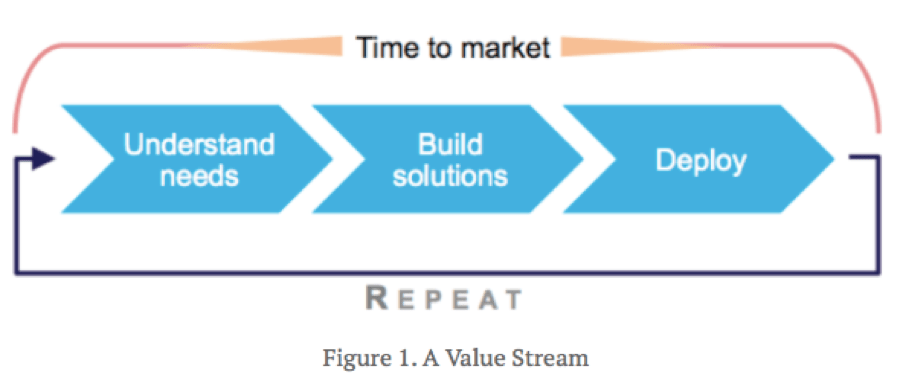
This chapter of the book talks about the people involved in the system development and the processes that guide their work:
- The value stream
- The key stakeholders
- The process of stakeholders engagement
- The network of stakeholders
As there is a lot to cover in this chapter, I will make several posts to cover it in small batches.
In this post, I will write about the value stream.
Agile Production in a Nutshell
Chapter two of the book is a small preview of the whole book, where the authors talk a bit about:
- engaging the stakeholders
- defining the problem
- what the system is
- what the system does
- the code
 @hgraca